

TL;DR: What you need to know
• The most common signs of stress in cats when their owner leaves are hiding, skipping meals, litter box accidents, overgrooming, extra vocalization and low energy.
• These signs show up because a trip breaks three things a cat relies on: routine, territory and your scent.
• A cat not eating for a full day, or straining in the litter box, is a veterinarian call, not a wait-and-see.
• Prevention works better than damage control: prepare the environment, keep feeding times fixed, and choose care that protects routine (a sitter who visits properly, or a cats-only boarding facility).
• Most cats settle within a few days of your return. Keep the reunion calm and let your cat come to you.
The signs of stress in cats are easy to miss, which is why owners come home from a trip to a shredded couch, an untouched bowl, or a cat who will not leave the closet. A cat stressed when its owner leaves rarely announces it.
Cats are built to hide vulnerability. So the clues are quiet: a skipped meal here, a new hiding spot there.
We have boarded cats in Chicago since 2010, and here is our honest position: almost every cat feels your absence. The question is not whether your cat notices. It is whether the stress stays mild and short, or tips into something that affects their health. This guide covers what to look for, why it happens, and what actually reduces it.
What are the signs of stress in cats when their owner leaves?
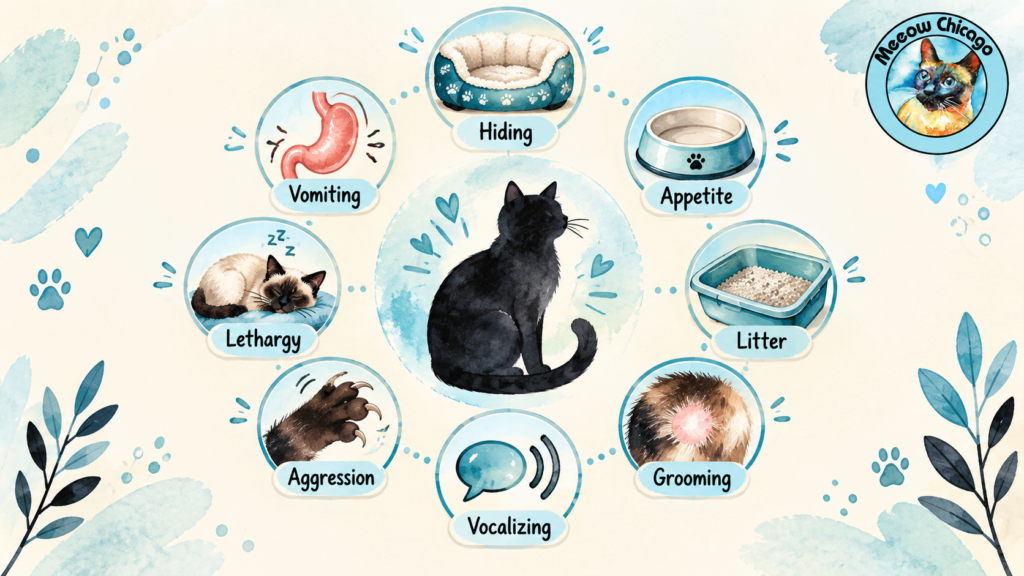
Stressed cat symptoms fall into two groups: behavior changes you can see, and physical changes that follow if the stress goes on. Any one of these can have a medical cause too, so a sudden or severe change always starts with a vet call.
| Sign | What it looks like | Mild or serious? |
| Hiding | Under beds, in closets, behind appliances for hours | Mild if brief; serious if your cat will not come out to eat or use the box |
| Loss of appetite | Untouched food, skipped meals | Serious after a full day without eating |
| Litter box changes | Peeing or pooping outside the box, spraying on walls | Serious if straining, crying in the box, or blood is present |
| Overgrooming | Bald patches on belly, inner thighs or front legs | Moderate; can cause skin infection over time |
| Vocalization | Yowling, crying at doors or windows, especially at night | Mild unless paired with other signs |
| Aggression | Hissing, swatting, biting a sitter or another cat | Moderate; protect people and pets first |
| Low energy | Sleeping far more than usual, no interest in play | Mild if brief; serious if it lasts past your return |
| Vomiting or diarrhea | Digestive upset with no diet change | Serious; call the vet |
A quick way to read the table: behavior signs (hiding, vocalization, aggression) mean the stress is fresh. Physical signs (appetite loss, vomiting, overgrooming) mean it has been building, and that is where feline stress starts to cost your cat.
A Frontiers in Veterinary Science review on feline stress, published July 2022, describes the same pattern. Stress shows up first as behavior, then as loss of appetite, overgrooming and inappropriate elimination as the stress response continues.
• Source: Dealing with Stress in Cats, Frontiers in Veterinary Science, July 2022
Why does a cat get stressed when the owner leaves?
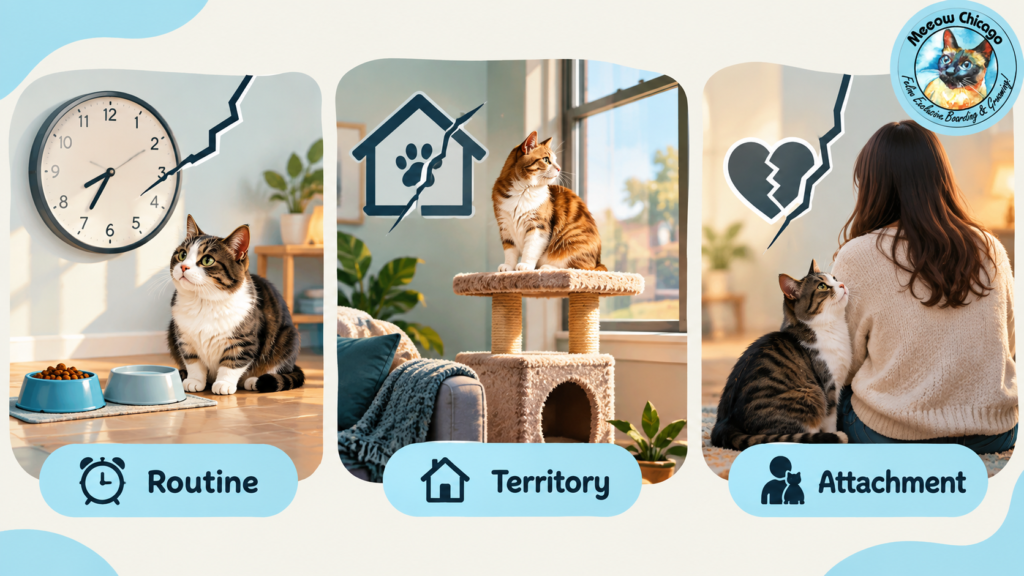
A cat gets stressed when the owner leaves because a trip removes three things at once: the daily routine, the familiar smell of the home, and the person the cat uses for security. Think of it like a hotel where the staff, the room and the checkout time all changed overnight. Nothing is dangerous, but nothing is predictable either.
Cats are territorial animals, and your scent is part of the territory. When you pack, the suitcase smells different. When a sitter arrives, the house smells like a stranger.
That scent change alone can trigger cat anxiety when the owner travels. It is why the Frontiers review treats smell as both a cause of feline stress and a route to relieving it.
The attachment piece is real too. Oregon State University researchers, in a study published in Current Biology in 2019, found about 64 percent of cats show secure attachment to their owner. That rate is close to what is seen in human infants.
In plain terms, most cats treat you as their safe base. Take the base away and the nervous system notices.
That noticing has a chemical side. Cortisol (the main stress hormone in cats) rises when a cat feels unsafe, and cortisol suppresses appetite and can cause nausea. So the cat not eating when the owner is away is not being dramatic. Their body is literally telling them food is a lower priority than staying alert.
Cat not eating when owner is away: when does it become an emergency?
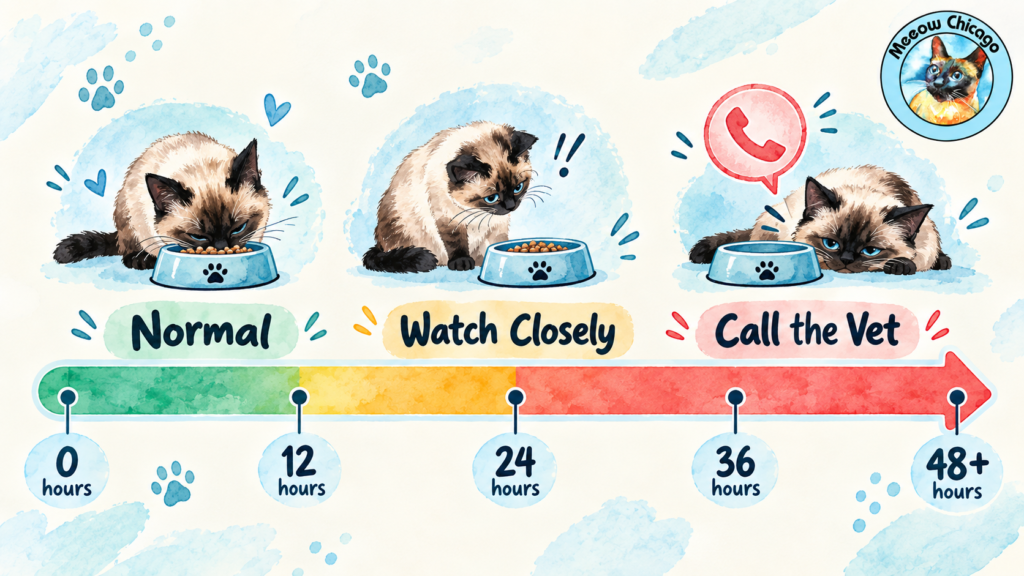
A cat not eating when the owner away needs a vet call after a full day of refused food, and sooner if the cat is overweight or already unwell. Cats do not tolerate fasting the way dogs do.
When a cat stops eating, the liver can start processing body fat faster than it should, and that can become a serious illness of its own. Loss of appetite is the one sign we would never wait on.
Here is the thing: a cat who skips breakfast on day one and eats dinner is normal. A cat who skips every meal for 24 hours is not.
Ask whoever is caring for your cat to report the actual amount eaten, not just “food was put down.” An untouched bowl is the most important thing a sitter or boarding staff can tell you.
Two practical fixes help most cats eat while you travel:
• Keep the same food and the same schedule. Do not switch brands the week before a trip. Feed at the same times your cat expects.
• Add warmth and smell. A spoon of warmed wet food or a sprinkle of the food’s own crumbs on top raises the scent, and scent drives appetite in cats.
Is your cat hiding when stressed, or just being a cat?

Cat hiding when stressed looks different from normal hiding in one way: the stressed cat will not come out for the things they usually value. A cat napping in a closet who trots out at dinner is fine.
A cat who stays under the bed through dinner, ignores a favorite toy, and will not use the litter box is telling you something.
Hiding behavior is a coping strategy, and a healthy one in small doses. The American Association of Feline Practitioners lists “provide a safe place” as the first of its five pillars of a healthy feline environment. A cat with a retreat recovers faster from stress than a cat without one.
Watch the body language alongside the hiding behavior. A stressed cat sits tucked and tense: ears flattened or swiveled sideways, pupils wide, tail wrapped tight. A relaxed hiding cat looks loose, blinks slowly, and may stretch. Same spot, very different body language.
Our advice, and we hold this one firmly: do not pull a hiding cat out. Dragging a scared cat into the open raises stress instead of lowering it. Sit nearby, speak softly, leave food within reach, and let them decide.
Cat peeing outside the litter box from stress: what should you do?

Cat peeing outside the litter box from stress is one of the most common problems owners find after a trip, and the fix starts with a vet visit, not a cleaning product. Inappropriate elimination (the veterinary term for going outside the box) has medical causes that look identical to stress.
Urinary tract infections, bladder crystals and kidney issues all present the same way. Rule those out first.
Once medical causes are cleared, treat it as a stress signal and fix the environment:
• Clean with an enzyme cleaner. Regular cleaners leave the smell behind, and the smell invites a repeat.
• Add a box. The working rule is one litter box per cat plus one more. A sitter who scoops once a day is not enough for a fussy cat.
• Keep boxes away from food and noise. A box next to a washing machine or the food bowl will get skipped.
• Never punish. Scolding a cat for elimination raises anxiety and makes the behavior worse.
Spraying on vertical surfaces (walls, door frames, luggage) is a related behavior. Cats spray to mark territory they feel is under threat, and a stranger in the house is a classic trigger. The same fixes apply.
How do you calm a stressed cat while you travel?
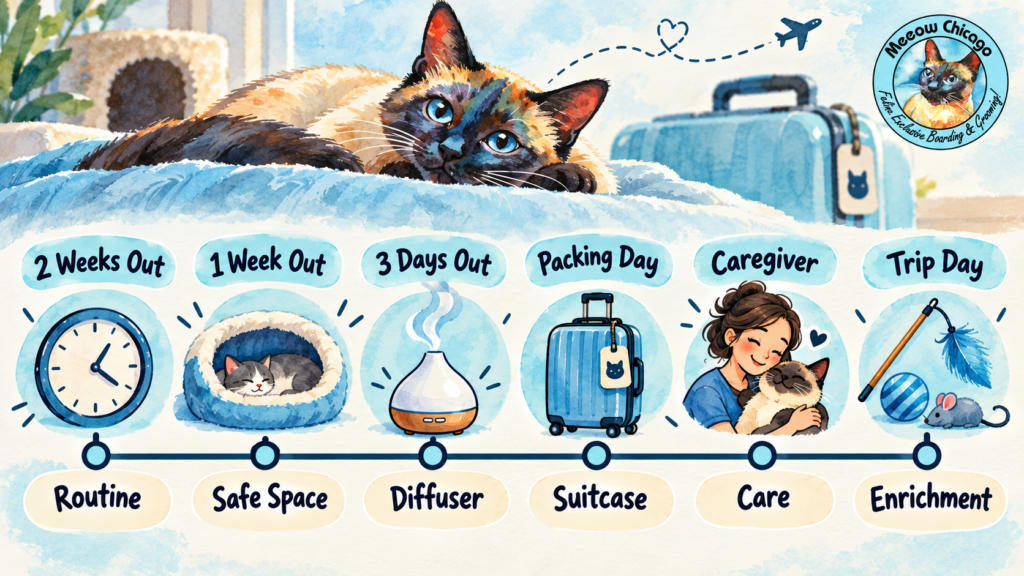
Calm a stressed cat while you travel by protecting routine, protecting territory, and choosing care that does the same. How to calm a stressed cat is less about calming products and more about removing the reasons for the stress in the first place. Follow this order:
1. Two weeks out: hold the routine steady. Same feeding times, same play session, same litter scoop time. A cat who has a predictable day copes better with an unpredictable event.
2. One week out: set up the safe place. A quiet room or high perch with a bed that smells like you. Leave a worn T-shirt in it. Scent is comfort.
3. Three days out: start a pheromone diffuser. A plug-in like Feliway releases a synthetic version of the facial pheromone cats use to mark a space as safe. Your veterinarian can tell you whether it is worth trying for your cat. We see it help some cats and do nothing for others, so treat it as a support, not a cure.
4. Pack out of sight. Load the suitcase in a closed room. Many cats connect the suitcase with your absence and start hiding before you leave.
5. Choose care that keeps the routine. For a short trip, a sitter who visits twice a day, plays, scoops and reports what was eaten is usually enough. For a longer trip, or a cat with a history of not eating, a cats-only boarding facility with staff on site is safer.
6. Build environmental enrichment into the absence. Environmental enrichment means giving the cat things to do that mirror natural behavior. Window perches, a rotating toy, a puzzle feeder. Play and predatory behavior is one of the AAFP’s five pillars for a reason: a cat with something to hunt has less time to worry.
One caveat. This plan works for a cat who is generally settled at home. It will not fix a cat already stressed by another cat, a new baby, or chronic pain; those cats need the underlying cause addressed first, ideally with a veterinarian or a certified cat behaviorist.
For cat stress relief during the trip itself, ask your caregiver for one thing above all: a short written update each day that includes food eaten, litter used, and where the cat was found. That three-line report catches problems on day one instead of day five.
If your cat is staying with us, that report is standard. Our Lincoln Park cat boarding suites are cats-only with no barking on the premises, because noise undoes everything above.
Travelers flying out of O’Hare can use our Schiller Park location near the airport.
Ask about park and fly drop-off when you book, so the cat is settled before you reach the terminal.
Why is your cat acting different after vacation, and how long does recovery take?

A cat acting differently after vacation is usually responding to two things: your scent changed, and their routine changed. Recovery after travel takes most cats two to three days. Some take a week. A very small number need a vet visit because the stress uncovered a medical issue.
Common post-trip behavior includes:
• Snubbing you. Turning away, refusing lap time, sleeping in a different room. This is not revenge. Cats do not hold grudges in the human sense. Your cat is reassessing a person who smells like airports and hotel soap.
• Clinginess. The opposite reaction: following you room to room, crying when you leave the room, sleeping on your head. This is a cat re-establishing a safe base.
• Renewed hiding. Especially if a sitter was in the house, or if the cat came home from boarding to a house that now smells slightly different.
• Litter box slips. A day or two of accidents can happen while the routine resets.
The best reunion is a boring one. Come in, put the bag away, wash your hands, then sit on the floor and let your cat approach. Resume feeding and play at the usual times that same day, because routine tells a cat the world is back to normal.
Overgrooming is the after-trip sign we watch longest, and it hides in plain sight.
The Cornell Feline Health Center notes that cats normally spend 30 to 50 percent of their day grooming, so compulsive licking is easy to miss.
Check the belly and inner thighs for thinning fur a week after you return. If it is spreading, that is a vet and behaviorist conversation.
When should you call a veterinarian or a cat behaviorist?
Call a veterinarian the same day if your cat has not eaten for 24 hours, is straining or crying in the litter box, is vomiting more than once, or has stopped drinking. Those are medical signs first and stress signs second.
Call a veterinarian within the week if hiding, aggression, or accidents last more than three or four days after you return, or if you find bald patches from grooming.
Ask for a referral to a certified cat behaviorist when the vet finds nothing medical and the behavior keeps going. A behaviorist looks at the whole household and builds a plan, and that is usually where long-term cat stress relief comes from, not from a product.
We are not veterinarians. Everything here is drawn from published feline welfare guidance and from years of watching cats settle (and occasionally not settle) in our suites. When our observations and your vet’s advice differ, follow your vet.
Frequently asked questions
Do cats get separation anxiety like dogs do?
Cats can show separation-related problems, but they look different from a dog’s. A dog might howl and destroy a door. A cat is more likely to go quiet, hide, stop eating, or eliminate on your bed. Because the signs are subtle, owners often miss them entirely until they come home. The Oregon State attachment research suggests most cats do use their owner as a source of security, which is the foundation of that reaction.
How long can a cat be left alone before stress sets in?
Most healthy adult cats handle a night alone with fresh food, water and clean litter. Past that, stress and safety risks climb because nobody is watching for the early signs. For anything longer than a night, arrange a caregiver who actually visits, plays and reports back, or use boarding.
Can stress make a cat physically sick?
Yes. Ongoing stress raises cortisol, which suppresses appetite and can inflame the gut, leading to vomiting and diarrhea. Stress is also a recognized trigger for urinary problems in cats. That is why the physical signs in this guide are treated as vet calls rather than behavior notes.
Is it better to board a cat or leave them home with a sitter?
It depends on the cat and the trip. A confident cat on a short trip usually does best at home with a sitter who visits twice daily. A cat who stops eating when alone, needs medication, or will be alone for a week or more is usually safer in a cats-only boarding facility where staff are present all day and can react on day one.
Does Feliway or a pheromone diffuser actually work for stress?
For some cats, yes, and for others it makes no visible difference. A pheromone diffuser mimics the facial pheromone a cat uses to mark a space as safe, which can lower background anxiety. It will not overcome a broken routine or a stranger in the house on its own. Use it as one layer, start it a few days before the trip, and ask your vet first.
Why is a cat so clingy after the owner gets back from vacation?
Clinginess after a trip is your cat re-establishing you as their safe base. Give the attention freely for a few days, keep feeding and play on schedule, and it usually fades on its own within a week. If it comes with crying at night or accidents, mention it to your vet.
The bottom line
• Stress in cats shows up as hiding, not eating, litter box changes, overgrooming, vocalizing, aggression and low energy. Watch for clusters, not single signs.
• A cat not eating for a full day is a vet call. So is straining in the box or repeated vomiting.
• Trips break routine, territory and scent. Protect all three and most of the stress never starts.
• Choose caregivers by what they report, not what they promise. Food eaten, litter used, cat located.
• Recovery after travel is usually two to three days. Keep the reunion calm and the routine fixed.
Planning a trip and want a second opinion on your cat’s setup? Contact Meeow Chicago at 773-917-7848.
We have been a cats-only boarding and grooming business in Chicago since 2010.
Find us in Lincoln Park at 1765 N. Elston Ave #104, Chicago, IL 60642, or near O’Hare at 4936 River Rd, Schiller Park, IL 60176.
You can read more about who we are or check our Google reviews before you decide.
