
what you need to know
• A healthy adult cat can handle a workday alone, and up to about 24 hours with food, water and a clean litter box.
• Kittens under 4 months need company every few hours. By 6 months, most can handle an 8-hour day.
• A senior cat left alone needs a daily check, especially with kidney disease, diabetes or arthritis.
• Beyond 24 hours, someone should see your cat.
• A week alone is never safe, even with an automatic feeder.
How long can a cat be left alone? For a healthy adult, a workday is fine and 24 hours is the ceiling without a check-in. Age and health change that answer more than anything else.
Short answer: a healthy adult cat can be left alone for 8 to 12 hours on a normal day and up to 24 hours with food, water and a clean litter box. Kittens need company every few hours. Seniors and cats with health conditions need daily checks.
Why you can trust this guide
- Hands-on experience: Meeow Chicago has cared exclusively for cats since 2010, first in West Town, in Lincoln Park since 2013 and now near O’Hare.
- Experienced team: our staff includes caregivers with 5+ years at Meeow, and our groomers are certified by the National Cat Groomers Institute.
- Owner trust: as of October 2026, our Lincoln Park location holds a 4.8-star Google rating from 260 reviews and our O’Hare location a 5.0 from 87 reviews.
- Sourced medicine: every health claim links to veterinary guidelines or a university veterinary college, listed in full at the end.
- Disclosure: we sell cat boarding. This guide tells you when you don’t need it.
Planning a trip rather than a workday? Our guide on how to leave your cat when you travel compares every care option.
In this guide: limits by age, kittens, seniors, health conditions, overnight to 3 days, warning signs, home setup and FAQs.
How long can a cat be left alone, by age?
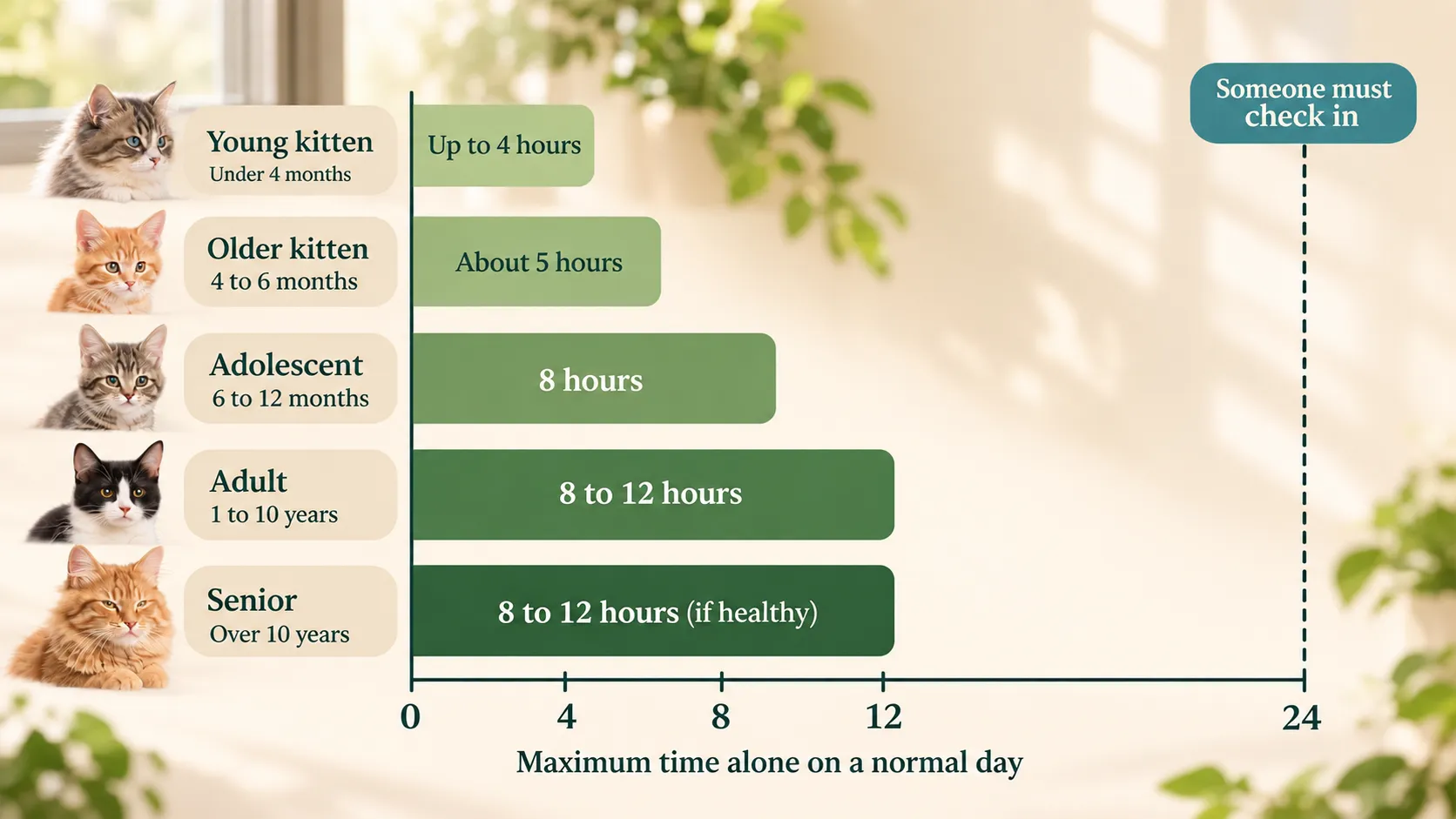
How long cats can be alone changes most with age. The life stages below come from the 2021 AAHA/AAFP Feline Life Stage Guidelines, and the kitten time limits come from Merck Animal Health’s owner guidance.
| Life stage | Age | On a normal day | Overnight or longer |
|---|---|---|---|
| Young kitten | Under 4 months | Up to 4 hours | Never alone overnight |
| Older kitten | 4 to 6 months | About 5 hours | Visits several times a day |
| Adolescent kitten | 6 to 12 months | An 8-hour workday | At least one visit a day |
| Adult | 1 to 10 years | 8 to 12 hours | Up to 24 hours, then a check-in |
| Senior cat | Over 10 years | 8 to 12 hours if healthy | Daily visit, twice if medicated |
Merck notes adult cats on dry food can manage 24 to 48 hours. We draw the line at 24 hours, because the risks below rarely announce themselves.
How long can kittens be left alone?
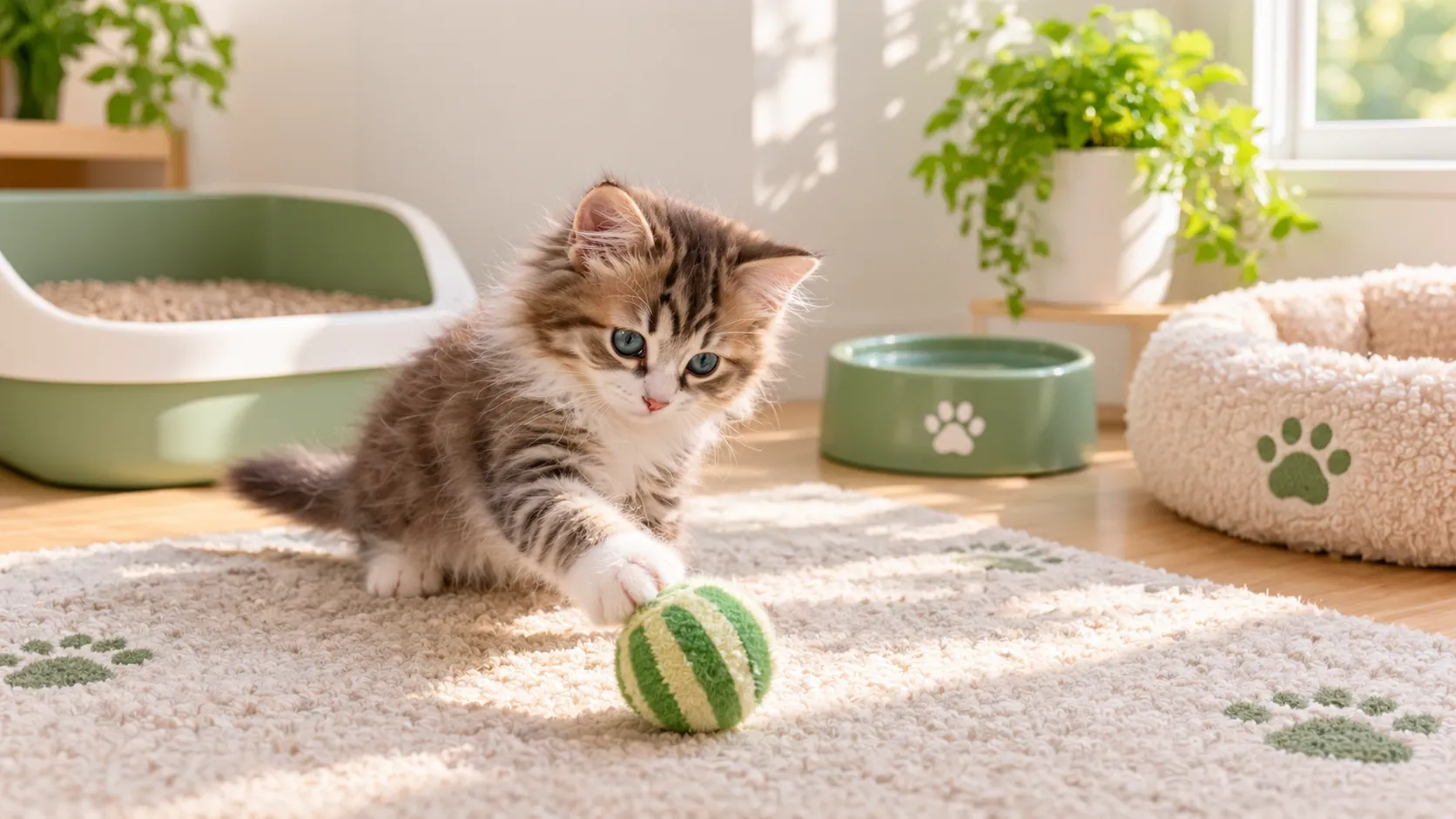
How long kittens can be left alone depends on age: up to 4 hours before 4 months, about 5 hours until 6 months, then a workday. A kitten eats often, chews cords and is still learning litter habits.
Leaving a kitten alone works best in one kitten-proofed room with a litter box, water and safe toys. For long workdays, book a midday visit for any kitten under 6 months, since kittenhood shapes social behavior.
What changes for a senior cat left alone?

A senior cat left alone faces higher odds of a quiet health problem. According to the Cornell Feline Health Center, chronic kidney disease affects up to 40 percent of cats over 10 and 80 percent of cats over 15.
Cats with kidney disease drink more, so dehydration becomes a real risk if a bowl spills or a fountain stops. Arthritis can make a high-sided litter box hard to use.
Plan a daily visit for any senior absence beyond a workday, twice daily with medication. Routine matters more as cats age.
Which health conditions shorten the time alone?
Some conditions turn a safe day alone into an emergency. With any of these, the condition sets the limit, not age.
| Condition | Why time alone is risky | What to arrange |
|---|---|---|
| History of urinary blockage | A blocked cat can die in under 24 to 48 hours | Someone checks the litter box at least daily |
| Diabetes | Insulin and meals must stay on schedule | Twice-daily visits or medical boarding |
| Kidney disease | Higher water needs, faster dehydration | Daily visit and two water sources |
| Poor appetite | Days without food can trigger fatty liver disease | Daily visit that confirms eating |
| Frequent hairballs or vomiting | Repeated vomiting can hide illness | Daily visit, vet call if it repeats |
The Cornell Feline Health Center calls urethral obstruction a true medical emergency, with death possible in less than 24 to 48 hours. Male cats face higher risk. A cat straining in the litter box needs veterinary care the same day.
Appetite matters too. The University of Illinois College of Veterinary Medicine warns that a cat going without food for a few days risks hepatic lipidosis, which can be fatal.
Occasional hairballs are normal, but frequent hairballs in a long-haired cat call for regular grooming. Our mobile grooming service comes to your door.
Is it OK to leave a cat alone while at work?
Yes. A cat left alone while at work for 8 to 10 hours is normal for most healthy adults, who sleep much of the day and like a steady routine.
Enrichment eases feline loneliness: a window perch, a puzzle feeder and toys you rotate weekly. A pet camera aimed at the food and litter area confirms your cat is eating. If long Chicago commutes push your days past 12 hours, add a midday visit.
Leaving a cat alone overnight, for 2 days or for 3 days: what’s safe?
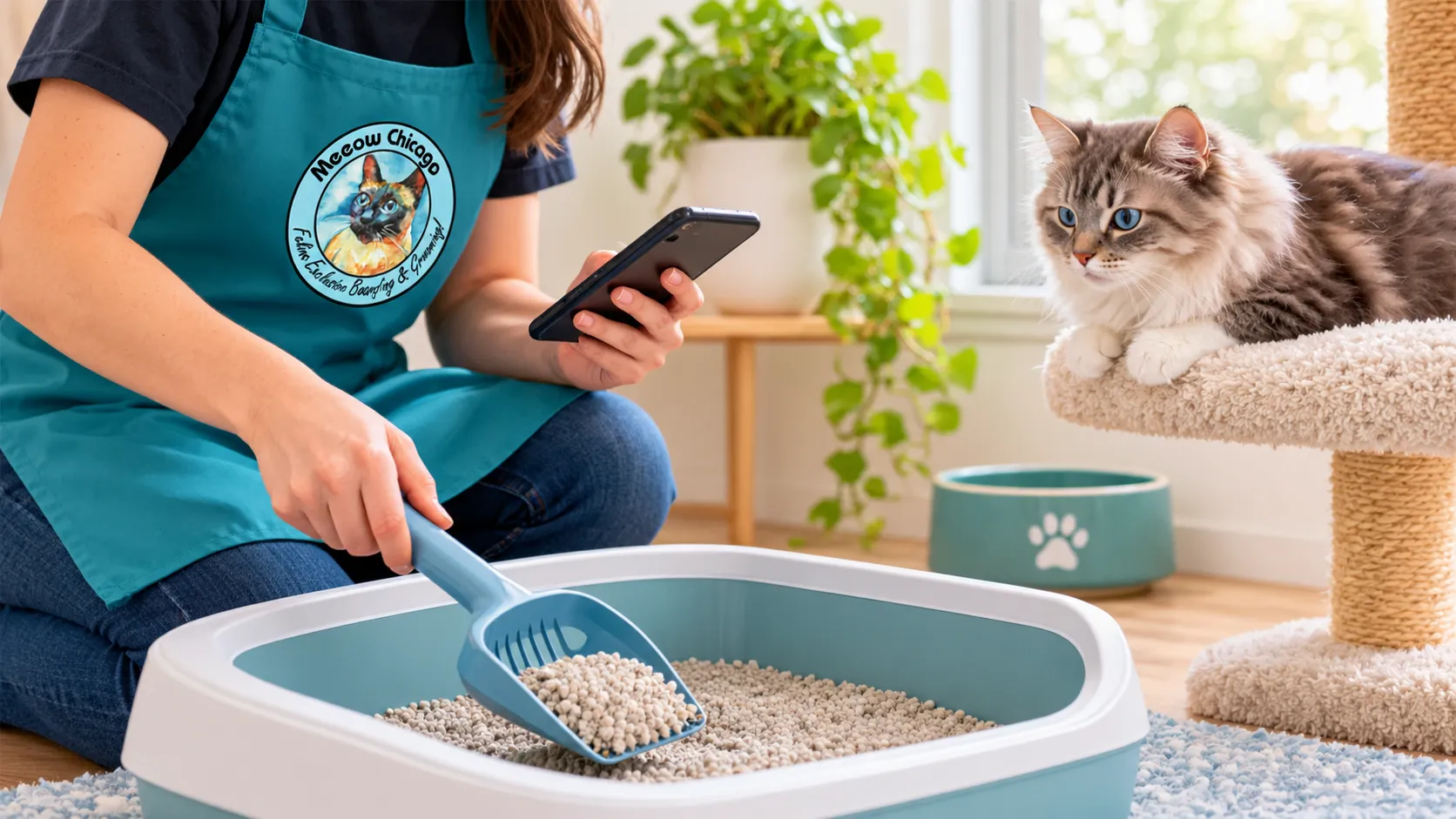
Leaving a cat alone overnight
Leaving a cat alone overnight is fine for most healthy adults with fresh water, food and a clean litter box. Kittens under 6 months and medicated seniors are the exceptions.
A cat alone for 2 days
A cat alone for 2 days needs at least one visit in the middle. Food may last, but nobody would notice a urinary blockage or a spilled fountain.
Leaving a cat alone for 3 days
Leaving a cat alone for 3 days without visits is too long. Plan a daily visit from someone who scoops litter, refreshes water and sees your cat. In Chicago, weather matters too: Merck advises leaving air conditioning on in summer heat.
Can you leave your cat alone for a week?
No. A week alone means seven days where nobody catches appetite loss or a blockage. Choose daily sitter visits, an overnight sitter, or our cats-only boarding in Chicago.
Do cats get lonely when left alone?
Many do. In a 2019 Current Biology study, Oregon State University researchers found about 64 percent of cats were securely attached to their owners. Feline loneliness is real, even in aloof cats, and enrichment softens it.
Separation anxiety (stress tied to your absence) usually shows up as behavior first. A 2022 review in Frontiers in Veterinary Science describes stress progressing to appetite loss and overgrooming. We cover the signs of separation anxiety in signs your cat is stressed while you’re away.
A multi-cat household with friendly social behavior can ease loneliness, but it doesn’t extend the safe time alone. In a multi-cat household, add an extra litter box and food station so neither cat guards resources.
What signs mean your cat needs a vet after time alone?
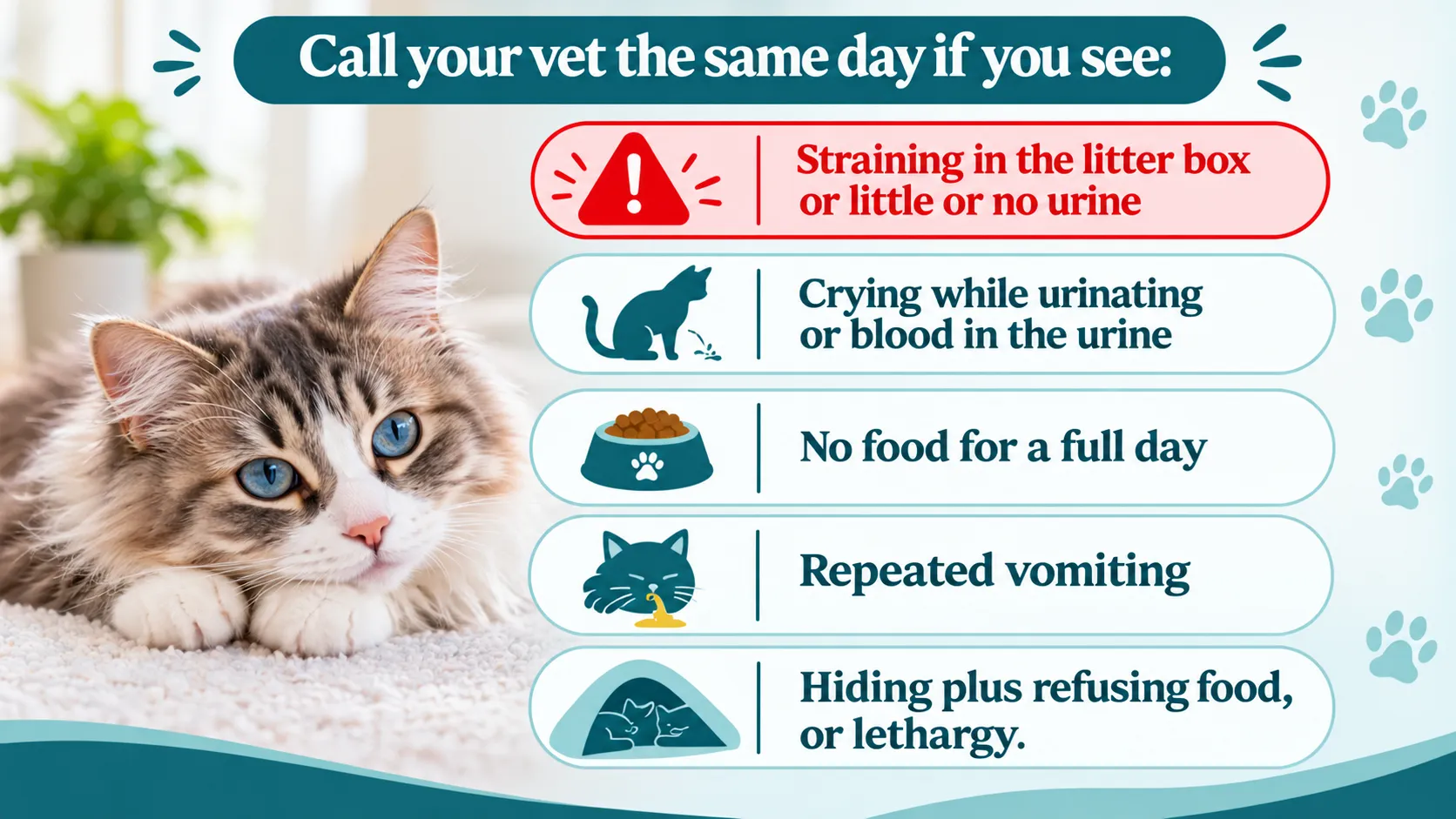
Check your cat soon after getting home, and ask any sitter to check at every visit. Call your veterinarian the same day if you see any of these.
- Straining in the litter box or many trips that produce little or no urine, the classic sign of a urinary blockage.
- Crying out while urinating, blood in the urine, or peeing outside the box.
- No food for a full day, or a full bowl your cat won’t approach.
- Repeated vomiting, beyond a single hairball.
- Hiding plus refusing food, or unusual weakness and lethargy.
The urinary signs above come from the Cornell Feline Health Center’s guide to lower urinary tract disease. Cornell also notes that stress and changes in feeding schedule can contribute to feline idiopathic cystitis, a common bladder inflammation. That’s one more reason to keep meal times steady while you’re away.
How do we keep routine for boarded cats?
When a cat boards with us, we protect the routine it has at home, because routine is what keeps a cat eating. Owners bring their cat’s own food and litter plus a piece of clothing that smells like home.
Our team sends daily photo and text updates, gives oral medication on your schedule, and refers cats needing injections to their veterinarian.
How do you set up your home before leaving a cat alone?
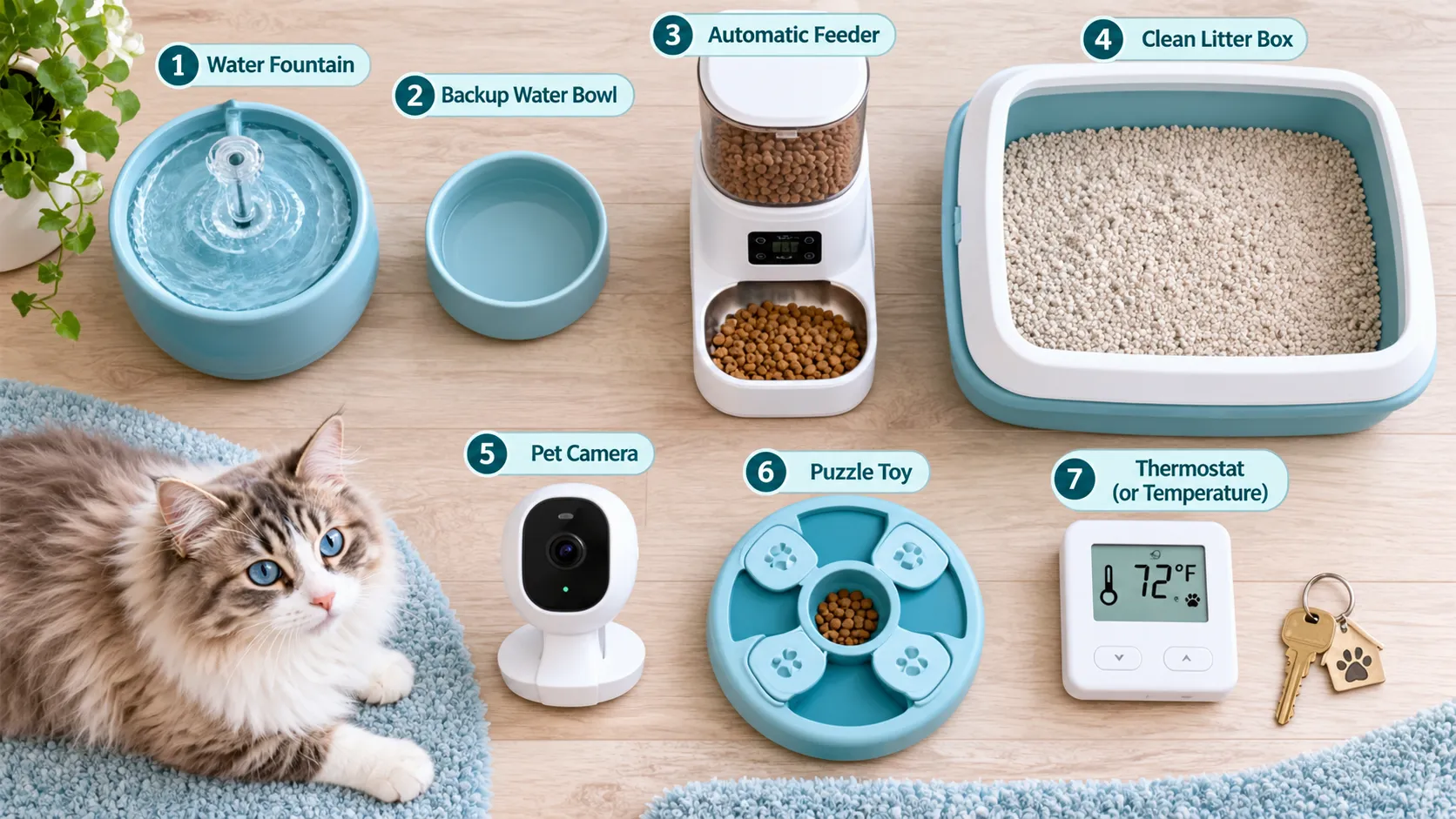
- Double the water. Run a water fountain plus a backup bowl in another room.
- Test the automatic feeder. Run it for three days while you’re home.
- Add a litter box. Scoop everything right before you leave.
- Set up a pet camera. Aim it at the food and litter area, not the couch.
- Leave enrichment. Puzzle feeders and a worn T-shirt with your scent.
- Control the temperature. Leave the heat or air conditioning on.
- Share an emergency plan. Give a neighbor a key and your veterinary care contacts.
When should you book a cat sitter or boarding instead?
Book a cat sitter or boarding whenever your absence passes 24 hours, or sooner for kittens, seniors and cats with health conditions. Our guide to cat boarding near O’Hare covers what to ask at any facility, or get in touch with our team at 773-917-7848.
Frequently asked questions
How long can cats be alone with an automatic feeder and water fountain?
About 24 hours for a healthy adult cat. Devices handle meals and water, not supervision, and can jam or lose power without anyone noticing.
Is 12 hours too long to leave a cat alone?
Not for most healthy adult cats, as long as food, water and a clean litter box are available. It is too long for kittens under 6 months. For a diabetic cat or one with a history of urinary blockage, check with your veterinarian.
Can you leave a cat alone during a Chicago winter?
Yes for a workday, not for days. A furnace failure or power outage can chill a home quickly, so for any winter absence past 24 hours, have someone check the house and heat.
Can a cat be left alone for 24 hours?
Yes, a healthy adult cat can, with fresh water, enough food and a clean litter box. Treat 24 hours as the limit, not the goal, and arrange a visit for anything longer.
Should you leave lights or a TV on for your cat?
Cats see well in dim light, so lights aren’t essential, but a lamp on a timer keeps the home’s day and night rhythm familiar. Low background sound may calm some cats, though results vary.
Bottom line: how long can a cat be left alone?
| Situation | Maximum time alone | What you need |
|---|---|---|
| Kitten under 4 months | Up to 4 hours | Frequent company |
| Healthy adult cat | 24 hours | Food, water, clean litter |
| Senior cat | A workday | Daily visit for longer absences |
| Cat with a medical condition | Ask your vet | Daily or twice-daily visits |
| Any cat, 2 days or more | Not alone | Daily visits or boarding |
How long a cat can be left alone comes down to one rule: no healthy cat should go more than 24 hours without someone seeing it, and kittens, seniors and sick cats need far less.
Away longer than a day? Book cat boarding at Meeow Chicago.
Medical note: this guide is general information, not veterinary advice. For a kitten, a senior cat or any cat with a health condition, ask your veterinarian how long your cat can safely be alone.
About the authors
The Meeow Chicago care team runs cats-only boarding in Lincoln Park and near O’Hare, plus SPAMEEOW mobile grooming. Read our story.
