
What You Need To Know (in 30 seconds)
- Start preparing your cat for boarding about four weeks out: book, check vaccines and bring the carrier out of storage.
- The usual cat boarding requirements are rabies and FVRCP vaccination records. Meeow also accepts titers or a vet exemption.
- Carrier training takes about two weeks of short, treat-based steps.
- A one or two night trial stay is the best way to get your cat used to boarding before a longer trip.
- Bring your cat’s own food, litter, medication and a comfort item with your familiar scent.
- Most cats settle within the first few days, both at boarding and back at home.
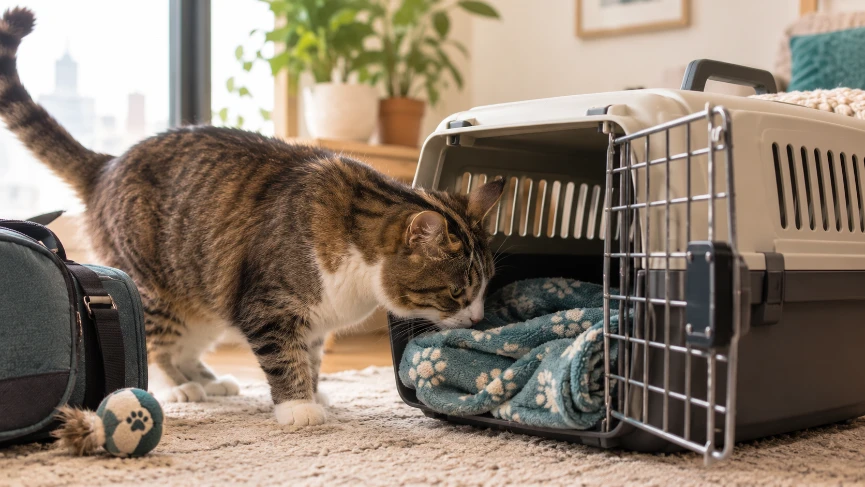
Preparing your cat for boarding is mostly about removing surprises. If this is your first time boarding a cat, here’s the good news: cats handle a new room better than most owners expect. What they handle badly is a carrier they’ve never seen, a food they’ve never tasted and a rushed goodbye.
We’ve welcomed a lot of first-timers since 2010. The calmest ones almost always had owners who started a few weeks early. These cat boarding first time tips follow the same timeline we give new clients, from four weeks out to the first night back home.
How far ahead should you start preparing your cat for boarding?
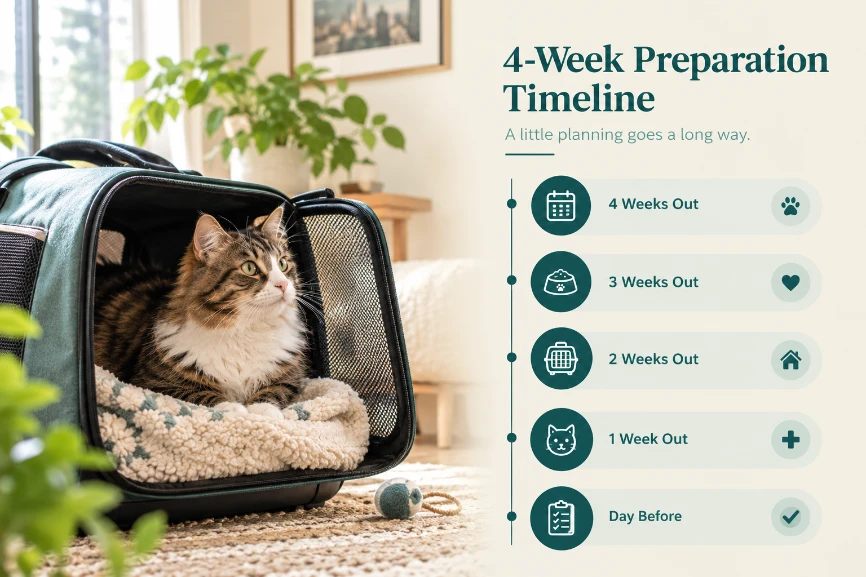
Start about four weeks before you leave. That gives you time for a veterinarian visit, two weeks of carrier training and a short trial stay, without cramming any of it into the last weekend.
Think of it like breaking in new shoes before a long trip. Nobody wears them for the first time on the airport walk.
| When | What to do |
| 4 weeks out | Book your dates, tour the facility, check vaccination records |
| 3 weeks out | Vet visit if anything is due, start carrier training |
| 2 weeks out | Trial stay of one or two nights, write the care sheet |
| 1 week out | Confirm the booking, buy extra food, set aside medication |
| Day before | Pack the bag, keep the feeding schedule normal, skip the bath |
Holiday dates fill first, so book as soon as your plans are set. You can reserve our cat boarding suites in Chicago online at any hour.
What are the usual cat boarding requirements?
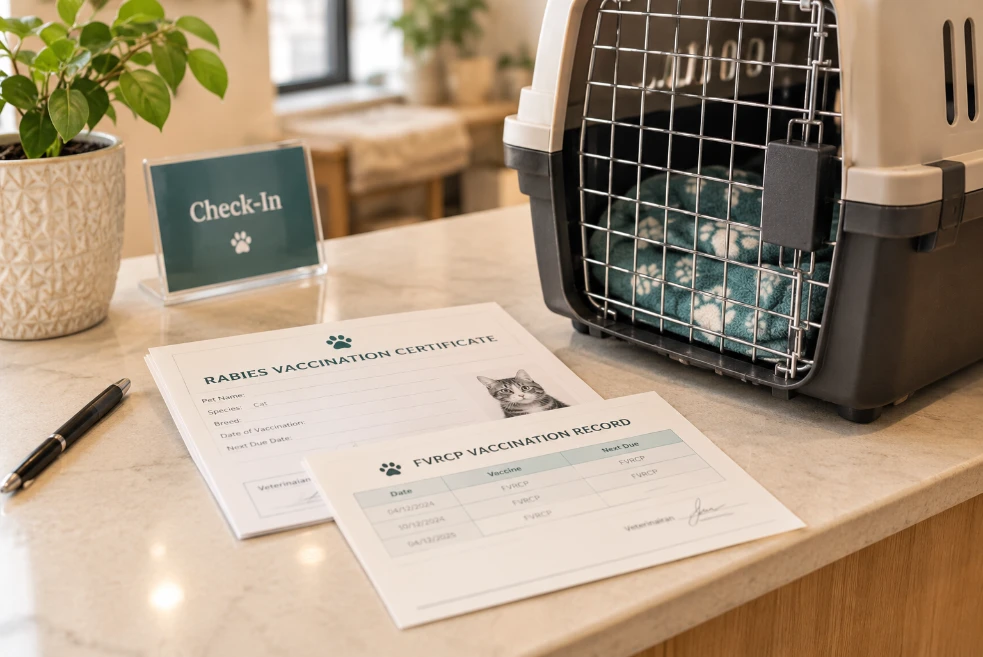
The standard cat boarding requirements are current vaccination records for the rabies vaccine and FVRCP (the combination shot that protects against feline herpesvirus, calicivirus and panleukopenia, also called feline distemper). Those match the core vaccines in the 2020 AAHA/AAFP Feline Vaccination Guidelines.
At Meeow, rabies and FVRCP are required. Titers (a blood test showing existing immunity) or a written vet exemption are also accepted, so text us before booking if that applies to your cat.
Why does this matter? A cattery is a bit like a school classroom. Kids from many homes share the air, so one cold can travel fast. Vaccines are the permission slip that keeps everyone healthier.
Book any vaccine update a few weeks before the trip, not the day before, and ask your veterinarian how long your cat needs before full protection. If your cat takes daily medication, get a refill at the same visit.
How does carrier training work for a cat?
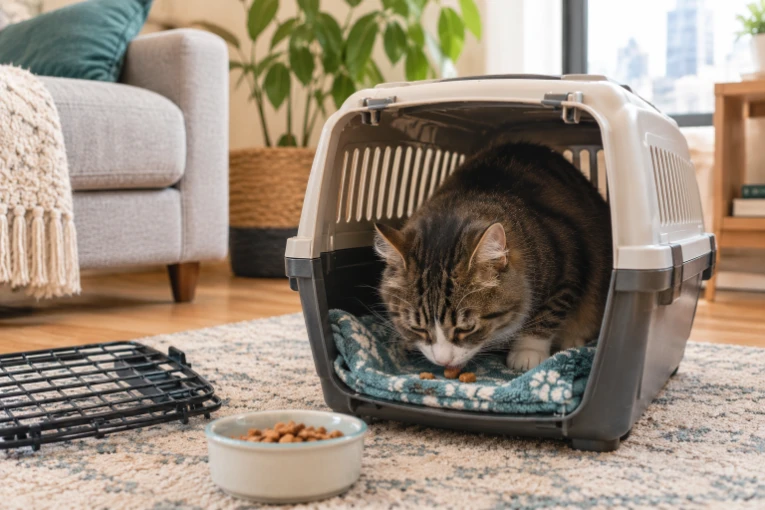
Carrier training means teaching your cat that the cat carrier is a safe den, not a warning that a vet trip is coming. The American Association of Feline Practitioners (AAFP) recommends keeping it where your cat already likes to spend time.
Here’s the carrier training cat plan we suggest, over two weeks:
- Days 1 to 3: take the door off, set the carrier in a favorite room, and add a blanket that smells like home.
- Days 4 to 7: drop treats inside, then move a meal or two into the carrier.
- Days 8 to 11: put the door back and close it for a few seconds while your cat eats.
- Days 12 to 14: lift the carrier from the bottom, walk a room or two, then try a five-minute car ride.
Pick the right carrier first. The AAFP calls a hard plastic carrier with a removable top the safest and easiest to clean, and says each cat should travel in its own carrier, even best friends.
On travel day, cover the carrier with a towel and set it on the car floor behind the front seat. Less to see means less to panic about.
How do you get a cat used to boarding with a trial stay?
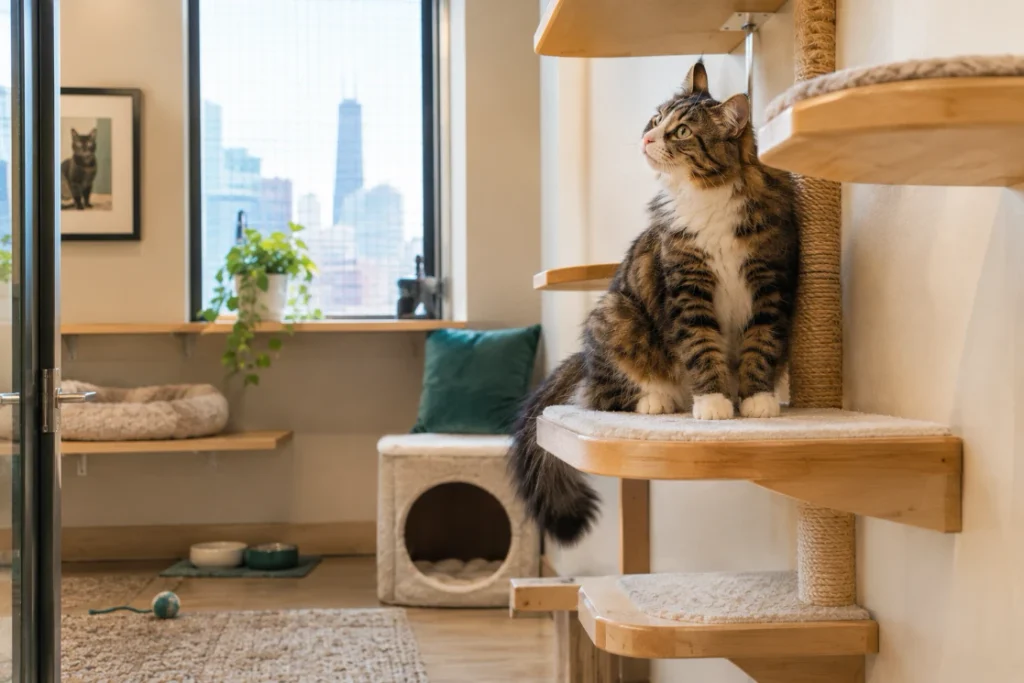
A trial stay is the best way to get a cat used to boarding. Book one or two nights about two weeks before the real trip. You’ll learn whether your cat eats, uses the litter box and settles into the boarding suite, while the stakes are low.
The research backs this up. In a study of 140 boarding cats by Kessler and Turner, most cats showed their biggest drop in stress during the first few days. That’s the adjustment period.
A summary of that study also notes that most of the owned cats had stayed in the same boarding setting before. A familiar place is simply less scary the second time.
Our honest caveat: a trial stay can’t promise a perfect week. A cat that hides all weekend but eats is usually fine. A cat that refuses food for the full trial is telling you something, and an in-home pet sitter may suit that cat better.
How do you prepare for boarding an anxious cat?
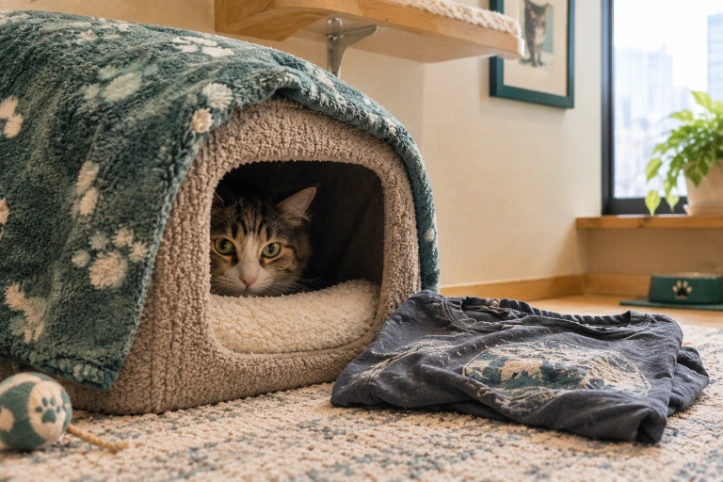
Boarding an anxious cat takes the same steps, just slower and with more scent from home. Stretch carrier training to three or four weeks, keep the trial stay short, and tell staff exactly how your cat shows fear.
Feline behavior gives you clues. Some cats hide, some stop eating, and some get loud. Writing that down helps staff spot stress early instead of guessing.
A few stress reduction moves that help nervous cats:
- Extra familiar scent: send two worn items, one for the bed and one draped over the carrier.
- A covered hiding spot: ask whether the suite has a box or covered bed your cat can retreat into.
- Pheromone spray: the AAFP guide says calming pheromone products can go on the carrier blanket 15 minutes to 4 hours before travel. They help some cats, not all.
- A vet conversation: for cats that panic in carriers, ask your veterinarian whether a pre-travel calming medication makes sense.
We’d rather know your cat is shy before drop-off than discover it on day two. Shy cats get quieter handling and more time to come out on their own.
What to bring to cat boarding: your checklist
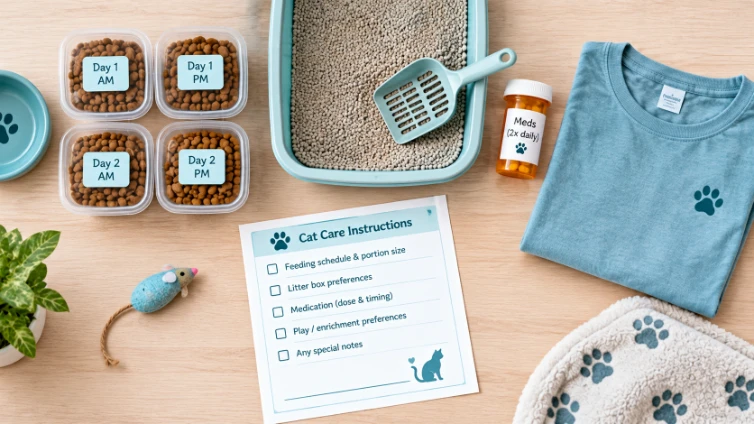
Bring your cat’s own food, litter, medication and one comfort item with your familiar scent. Familiar food and scent calm a nervous cat more than any new toy.
Here’s the cat boarding checklist we hand new clients:
- Food: enough for every meal of the stay, plus two extra days in case your flight slips.
- Feeding schedule: meal times and portion sizes, written down.
- Litter: the same brand your cat uses at home.
- Medication: in the original labeled bottles, with written doses and times.
- Comfort items: an unwashed T-shirt or pillowcase you’ve slept on, plus a favorite toy.
- Vaccination records: printed or emailed ahead of time.
- Emergency contact: your number, a local backup and your veterinarian’s phone number.
Skip anything with strings, bells or small parts that a bored cat could swallow. And please don’t buy a new bed for the trip. New things smell like nothing, and nothing isn’t comforting.
One limit to know: we give oral and topical medication, but we can’t give injections, since Illinois treats that as veterinary service unless the owner does it. Ask your vet about medical boarding for cats on injections.
How do you make drop-off and pick-up calm?
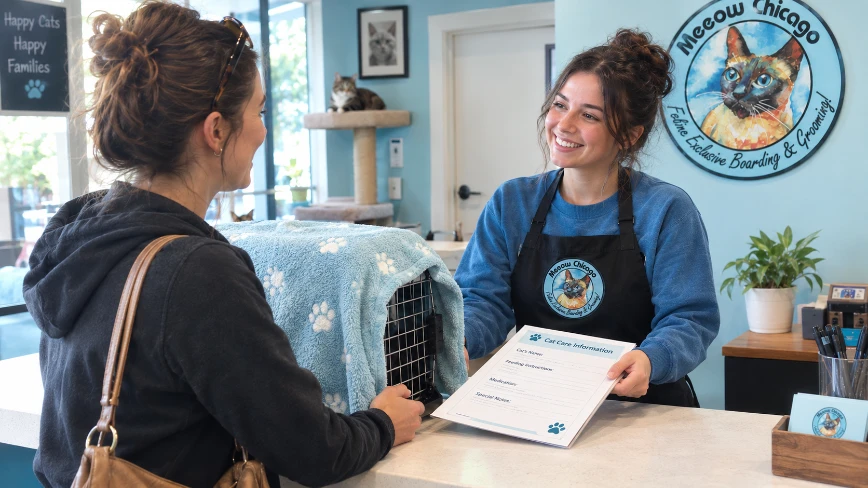
Keep drop-off boring. Feed your cat at the usual time, keep the house quiet, and load the carrier only when it’s time to leave. Cats read your stress, so a calm, short goodbye helps more than a long one.
Run through this at the front desk:
- Hand over the care sheet and point out anything urgent.
- Mention how your cat shows stress, whether that’s hiding, yowling or skipping meals.
- Share the best number to reach you while you’re away.
- Say goodbye once, then go.
Pick-up works the same way in reverse. Bring the same carrier and blanket, and confirm your pick-up time a day ahead so your cat isn’t waiting in a carrier.
Flying out of O’Hare? Our Park and Fly options put covered airport parking about 75 feet from our door, or our team can pick up your cat for $59 each way.
What should you expect when your cat comes home?
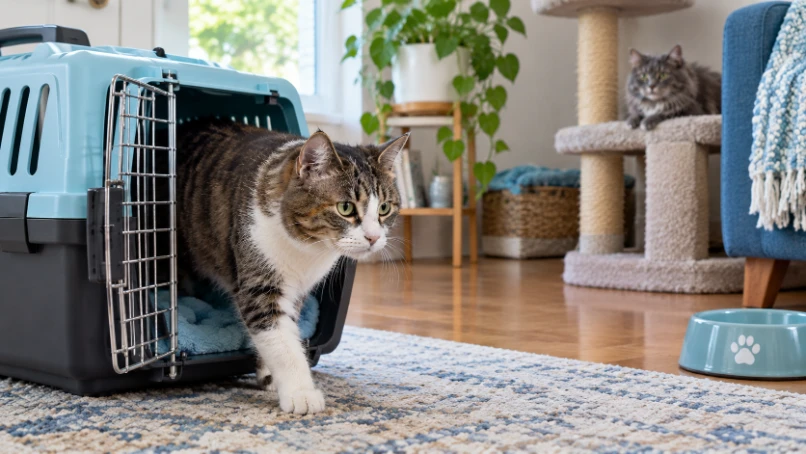
Expect a little hiding, extra sleep or extra clinginess for a few days after a first stay. That’s a normal adjustment period, not a sign the stay went badly. Let your cat come to you rather than picking it up right away.
Multi-cat homes need one extra step. Your returning cat smells like a different place, so your other cats may hiss as if a stranger arrived. The AAFP suggests keeping the returning cat in a separate room at first and swapping bedding so the house smells shared again.
Call your veterinarian if your cat won’t eat for a full day after coming home, or shows sneezing, eye discharge or vomiting. For a fuller list, read our guide to signs your cat is stressed while you’re away.
Frequently asked questions
How long does it take a first time boarding cat to adjust?
Most cats adjust within the first few days. They may hide or eat less on day one, then start exploring and eating normally as the routine becomes familiar. In the Kessler and Turner study, the biggest drop in stress came early in the stay. A cat that still refuses food after a full day needs a closer look from staff.
Is boarding a cat for the first time on a long trip OK?
It can work, but a trial stay first is much better. One or two nights shows how your cat eats, sleeps and settles before you’re halfway across the world. If a trial isn’t possible, book a facility that sends daily photo updates, so you’re not guessing while you’re away.
Should you visit the vet before boarding your cat?
Visit your veterinarian if vaccines are due, your cat takes medication, or anything about its health has changed. Get printed vaccination records and medication refills at the same appointment. A healthy cat handles the change of scene better, and boarding staff need accurate records to care for your cat well.
Can you bring your cat’s bed and toys to board?
Usually yes, within reason. At Meeow we ask for your cat’s food, litter, approved medication and something that smells like home, such as a worn T-shirt or pillowcase. One or two favorite toys are fine. Leave out anything with strings or small parts.
Why is your cat acting weird after boarding?
Cats often act distant, clingy or sleepy after boarding because their routine changed and home now smells slightly unfamiliar. Most return to normal within a few days. Keep feeding times steady and let your cat approach you. See your vet if your cat stops eating or shows cold symptoms.
The bottom line
A first stay away goes best when nothing about it is a surprise. Start four weeks early, train the carrier, run a short trial stay, and pack the smells and foods of home.
Then trust the routine. Most cats settle faster than their owners do. For more planning help, read how to leave your cat when you travel, or text us at 773-917-7848 with any first-stay questions.
