Last updated: November 2, 2026 | By Jennifer Schilling, Meeow Chicago
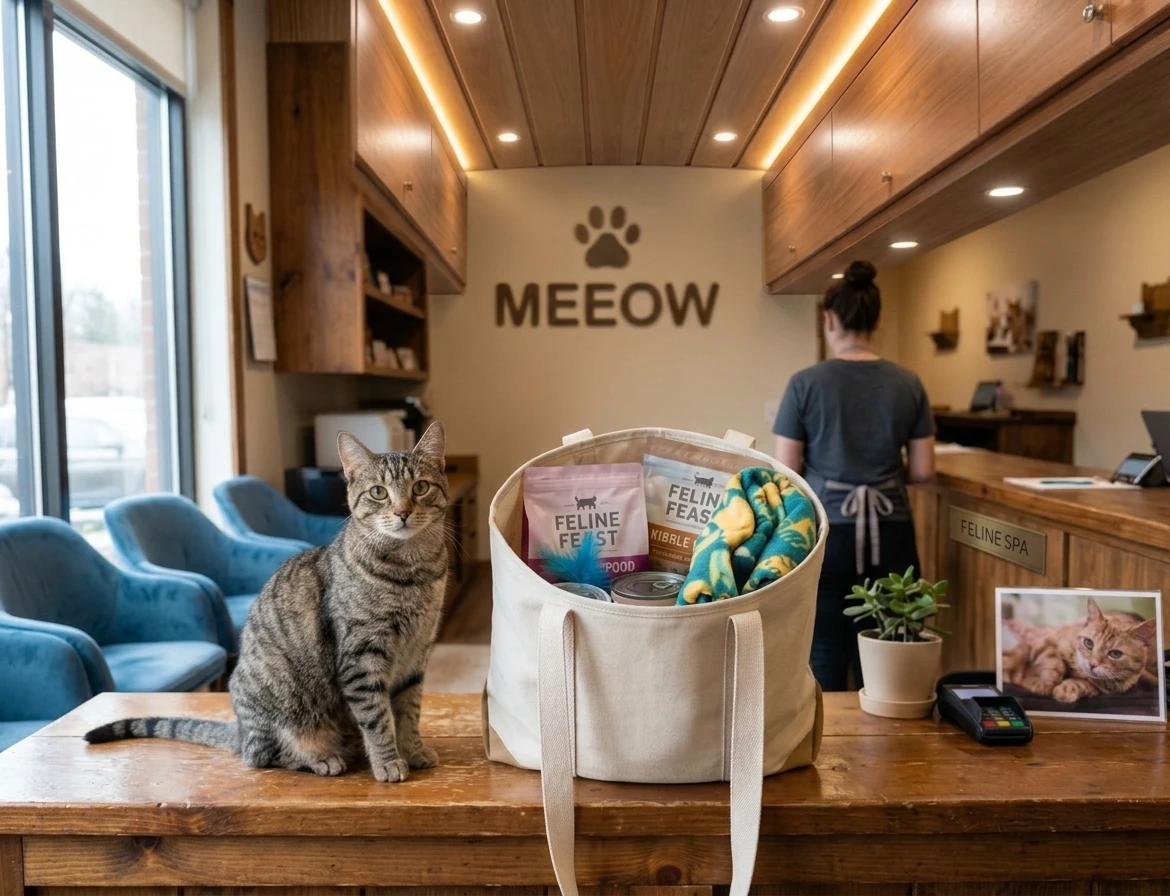
What you need to know in 30 seconds
- Pack your cat’s usual cat food, written feeding instructions, any medication and a worn blanket or T-shirt that smells like home.
- Bring a vaccination certificate for rabies and FVRCP, your vet contact and an emergency contact.
- Pack food for every meal of the stay plus two extra days, portioned by meal.
- Bring your cat’s own litter if it’s picky, and list any allergies or special needs.
- Leave the litter box, big scratching post and brand-new bed at home. Most boarding facilities supply those.
Knowing what to pack for cat boarding, or what to bring when boarding a cat for the first time, saves you a scramble the night before a flight. The good news: a cat boarding checklist is short. Food, paperwork, medication and one thing that smells like you cover almost everything.
If you typed something like a boarding cat into Google the night before a trip, this list is for you. We’ll be straight with you: most owners overpack. A cat needs familiar food and a familiar smell far more than a suitcase of toys.
Still deciding between boarding and a sitter? Read our cat boarding vs pet sitter comparison first.
What to pack for cat boarding: the quick checklist
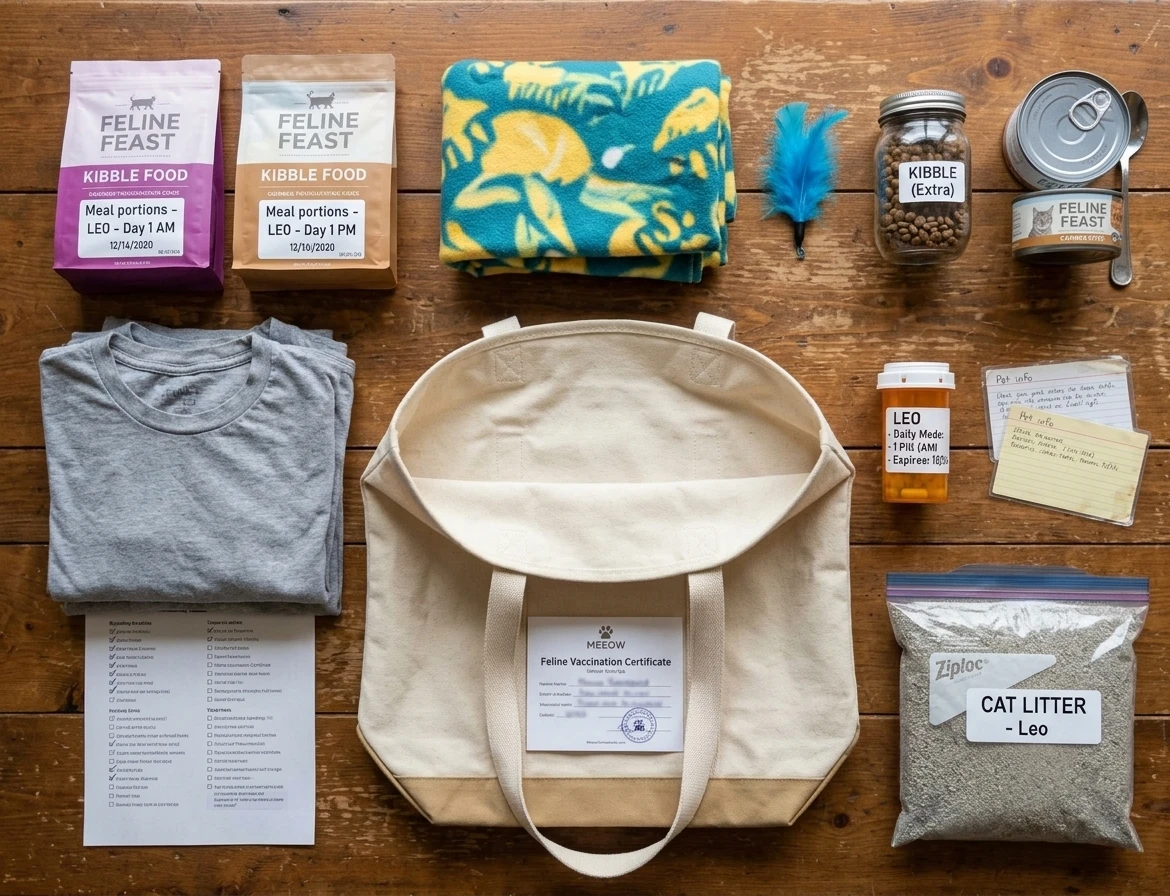
Here’s the cat boarding packing list we give every new Meeow client. Print it, tick it off, and you’re done.
| Item | Why it matters | Notes |
|---|---|---|
| Cat food | Keeps digestion steady | Every meal plus 2 extra days |
| Feeding instructions | Staff match your routine | Amounts, times, quirks |
| Treats | A familiar reward helps shy cats | Only treats your cat already eats |
| Medication | Keeps treatment on schedule | Original labeled bottles |
| Vaccination certificate | A standard boarding requirement | Rabies and FVRCP |
| Vet contact and emergency contact | Fast decisions if something changes | Two numbers you’ll answer |
| Blanket or worn T-shirt | Familiar scent calms nerves | Unwashed is best |
| Litter | Avoids litter box refusal | If your cat has a strong litter preference |
| One or two cat toys | Something known to bat around | No strings or small parts |
At Meeow, we ask for exactly four things: your cat’s food, litter, approved medication and a piece of clothing or pillowcase that smells like you. Everything else in our suites, from bedding to the cat tower, is already there.
How much cat boarding food should you pack?
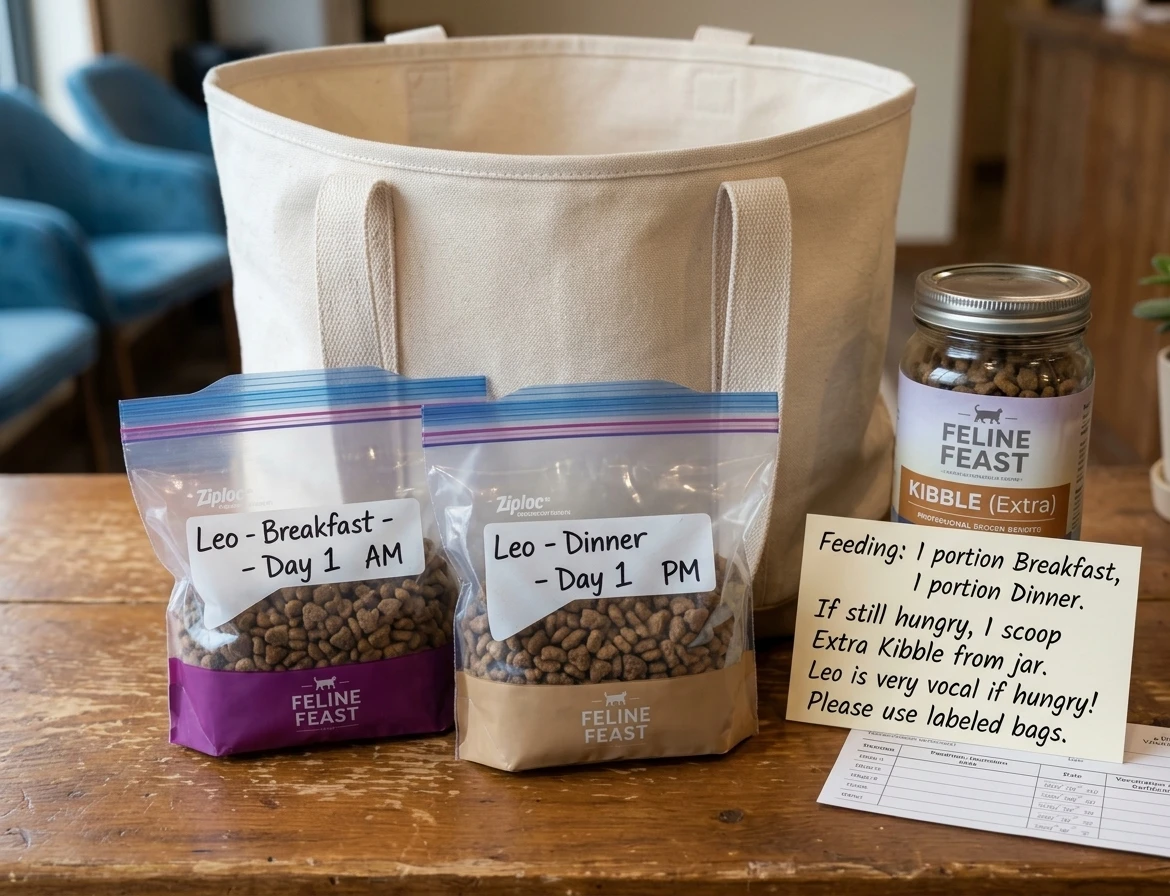
Pack enough cat boarding food for every meal of the stay, plus two extra days in case your flight is delayed. Portion it by meal in labeled bags or containers, so staff can feed the exact amount your cat eats at home.
Toronto Humane Society’s boarding checklist suggests a sealed, airtight container labeled with your cat’s name and first and last night. Tape written feeding instructions right onto it.
Why not let the boarding facility feed its own brand? Switching food suddenly is a bit like a long flight with airline meals: your stomach notices. Guidance from cat veterinarians on changing your cat’s food says a switch should be gradual over 7 to 10 days, sometimes longer.
A boarding week is not the time for that. Here’s what your feeding instructions should cover:
- Amount: cups or cans per meal, not “a scoop.”
- Times: breakfast and dinner, or free feeding.
- Quirks: warmed food, water added, eats only from a flat dish.
- Treats: which ones, how many, and when.
Prescription diet cats: pack the full stay plus extra, in the original bag or cans, and note it in bold on your instructions. Never let a cat on a prescription diet “make do” with other food for a few days.
What cat boarding paperwork and requirements do you need?
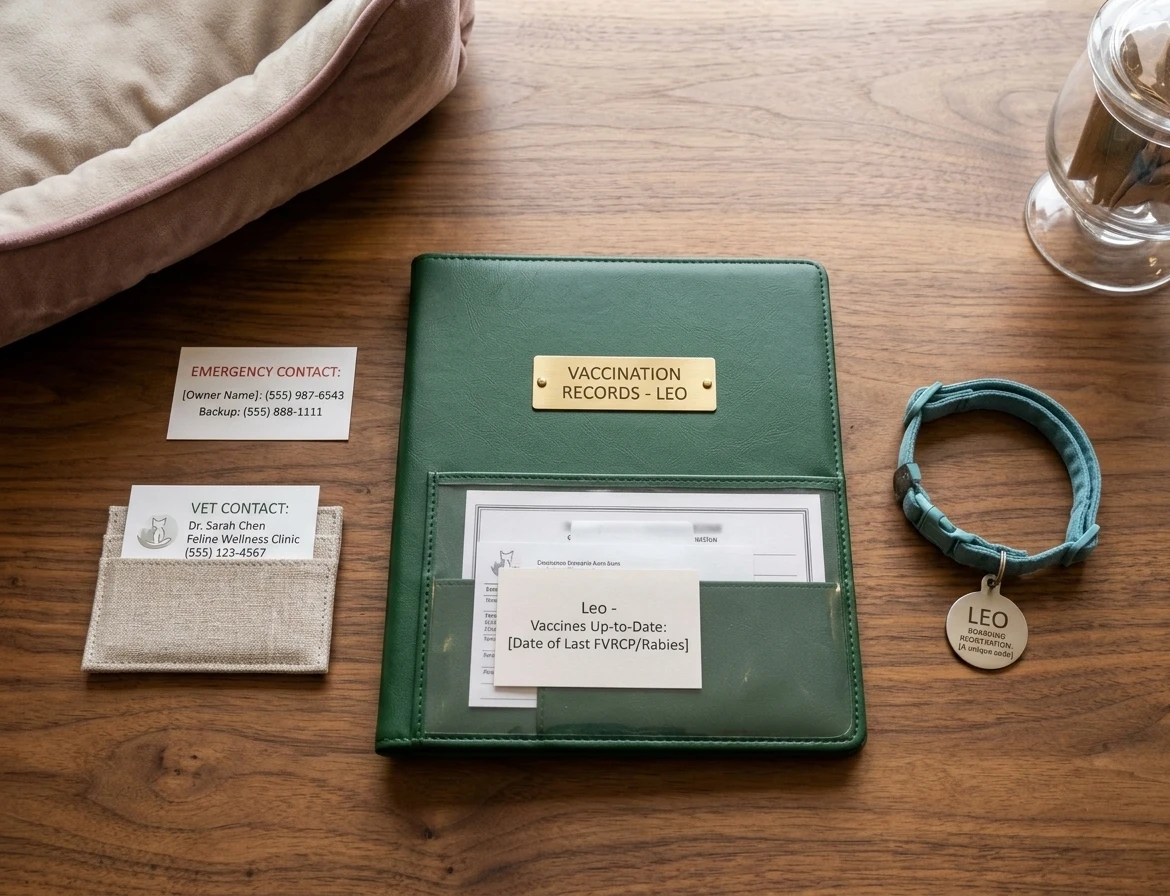
The core cat boarding requirements are a current vaccination certificate, your vet contact and a working emergency contact. Most boarding facilities ask for rabies and FVRCP, which match the core vaccines in the 2020 AAHA/AAFP Feline Vaccination Guidelines.
At Meeow, rabies and FVRCP are required, and we also accept titers or a written vet exemption. Email records ahead of time so check-in takes minutes, not a phone call to your clinic.
Here’s the cat boarding paperwork to have ready:
- Vaccination certificate: rabies and FVRCP, with dates.
- Vet contact: clinic name, phone and your cat’s file name there.
- Emergency contact: someone local who can make decisions if you’re on a plane.
- Special needs and allergies: food allergies, health conditions, handling notes, fears.
- Microchip number: plus the registry it’s listed with.
A microchip only helps if the registry has your current phone number. The AAHA microchipping FAQ says you must keep your contact information up to date in the registry. The AVMA suggests checking it every August 15 on Check the Chip Day.
Collar and ID: if your cat already wears a breakaway collar with an ID tag, leave it on. Don’t put a collar on a cat for the first time right before boarding.
How should you pack medication for boarding?
Pack medication in the original labeled bottles, with a written schedule showing the dose, time and how your cat takes it best. Send a few extra doses in case your return is delayed.
Think of the schedule as a handoff note between shifts. The clearer it is, the less anyone has to guess, so “half a pill in a treat with breakfast” beats “one pill daily.”
One limit to know: we give oral medication, pills hidden in food and topical treatments, but we can’t give injections. In Illinois, injections by anyone but the owner count as veterinary service. Cats needing injections should go to medical boarding through a veterinarian.
Which comfort items for cats should you pack?
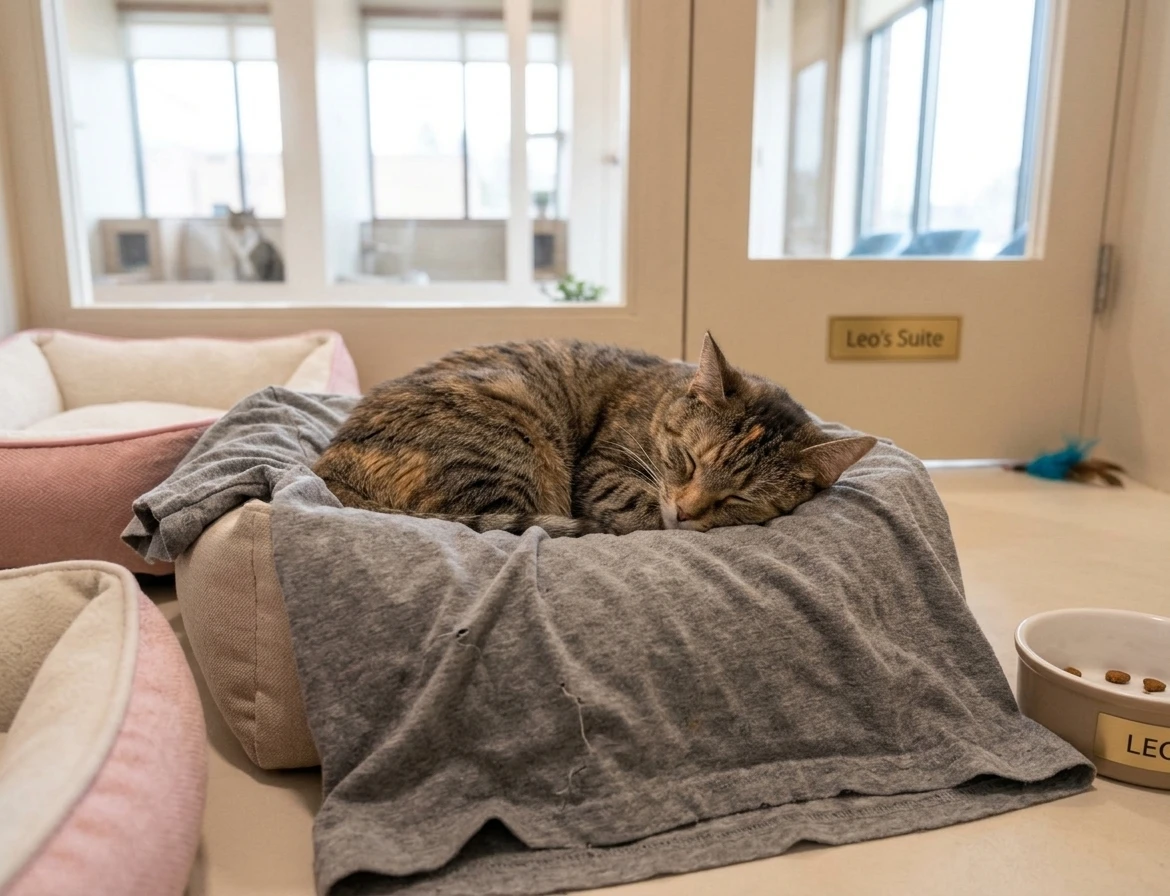
The best comfort items for cats are things that already smell like home. One unwashed blanket, pillowcase or T-shirt you’ve slept in does more than a new bed ever could.
It’s the same reason a hotel room feels better with your own pillow. Scent is how a cat decides whether a place is safe, and new things smell like nothing.
A familiar scent can ease the hiding and skipped meals described in our guide to signs your cat is stressed while you’re away.
What to pack and what to skip:
- Blanket or worn T-shirt: yes, one or two items.
- Bedding from home: optional. Our suites come with luxury cat bedding, so a familiar blanket on top works best.
- Scratching post: leave it home. Our suites have a cat tower and wall climbing shelves. Other facilities may differ, so ask.
- Pheromone spray: optional. Spray the blanket before traveling if it helps your cat.
Should you pack cat boarding toys?
Yes, pack one or two cat boarding toys your cat already loves, and leave the rest at home. A familiar toy gives a nervous cat something known to bat around on day one.
Pick toys that are safe when no one is watching:
- Good choices: small balls, crinkle toys, a favorite plush mouse.
- Skip: wand toys with strings or feathers, anything with bells or small glued parts.
A toy that’s safe while you play together can be a swallowing risk in an empty suite at night. If your cat only plays with a wand toy, tell staff, and ask about supervised playtime instead.
What should you leave at home?
Leave anything the boarding facility already provides, anything new to your cat, and anything you’d hate to lose. Overpacking just means more to track at pick-up.
- Litter box: our suites have private potty quarters. Just bring the litter if your cat is fussy.
- New beds or new toys: they smell unfamiliar and add nothing.
- New food: save any diet change for after the trip.
- Large furniture: scratching posts and cat trees take space and rarely transfer well.
- Unlabeled pills: loose pills in a sandwich bag can’t be safely given.
Not sure whether your cat is ready for a stay at all? Our guide on how to prepare your cat for boarding covers carrier training and trial stays. For every other option, see how to leave your cat when you travel.
Frequently asked questions
Do you need to bring your own litter for cat boarding?
Bring your own litter if your cat has a strong litter preference or has refused a new litter before. A sudden switch in texture or scent can make a cat avoid the box. That’s why we ask Meeow clients to bring their usual litter, so bathroom habits stay the same.
Can you bring treats to cat boarding?
Yes, as long as they’re treats your cat already eats. Pack them separately from meals and write down how many your cat gets and when. Skip new treats, rich chews or anything your cat is allergic to. If your cat is on a prescription diet, check with your vet before sending any treats at all.
What if your cat eats a prescription diet?
Pack the full amount for the stay, plus extra, in the original packaging, and mark it clearly in your feeding instructions. Boarding staff should never substitute another food for a prescription diet. If your cat also takes medication with meals, note which meal and how it’s given, such as hidden in wet food.
Should your cat wear a collar at boarding?
If your cat normally wears a breakaway collar with an ID tag, it can keep wearing it. Don’t add a new collar right before boarding, since an unfamiliar collar can stress a cat or catch on things. A microchip with up-to-date registry details is the better backup. Ask your boarding facility about its own collar policy.
Is the packing list different for two cats?
Mostly it’s the same list, doubled where it matters. Label each cat’s food and medication separately with its name, and write separate feeding instructions if they eat differently. One shared blanket that smells like home is fine if the cats share a suite. At Meeow, two cats can share a suite for a lower rate than two suites.
The bottom line
What to pack for cat boarding fits in one tote bag: food, feeding instructions, medication, paperwork and one item that smells like you. Everything else is optional, and a lot of it is better left at home.
Ready to book? You can reserve our cat boarding suites in Chicago online any time.
Flying out of O’Hare? Our Park and Fly options put covered airport parking steps from our door. Questions about your list? Text us at 773-917-7848.
